Treated pine palings
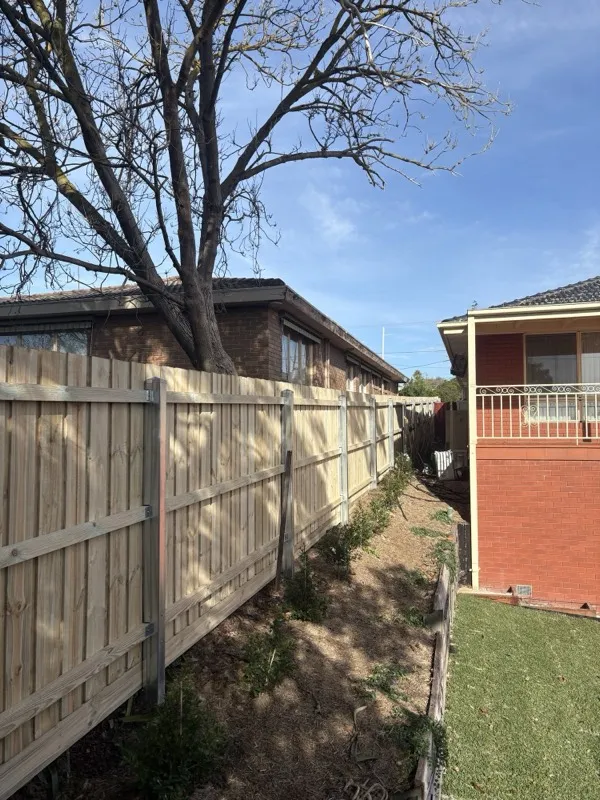
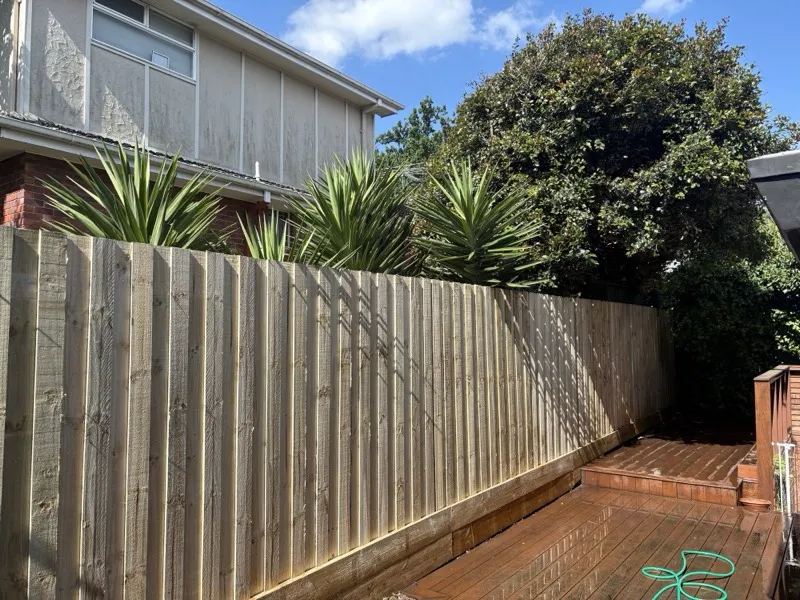
The palings on our paling fences are treated pine, fixed to straight rails with a plinth along the base.
Straight rails, clean palings and posts set at the right depth.
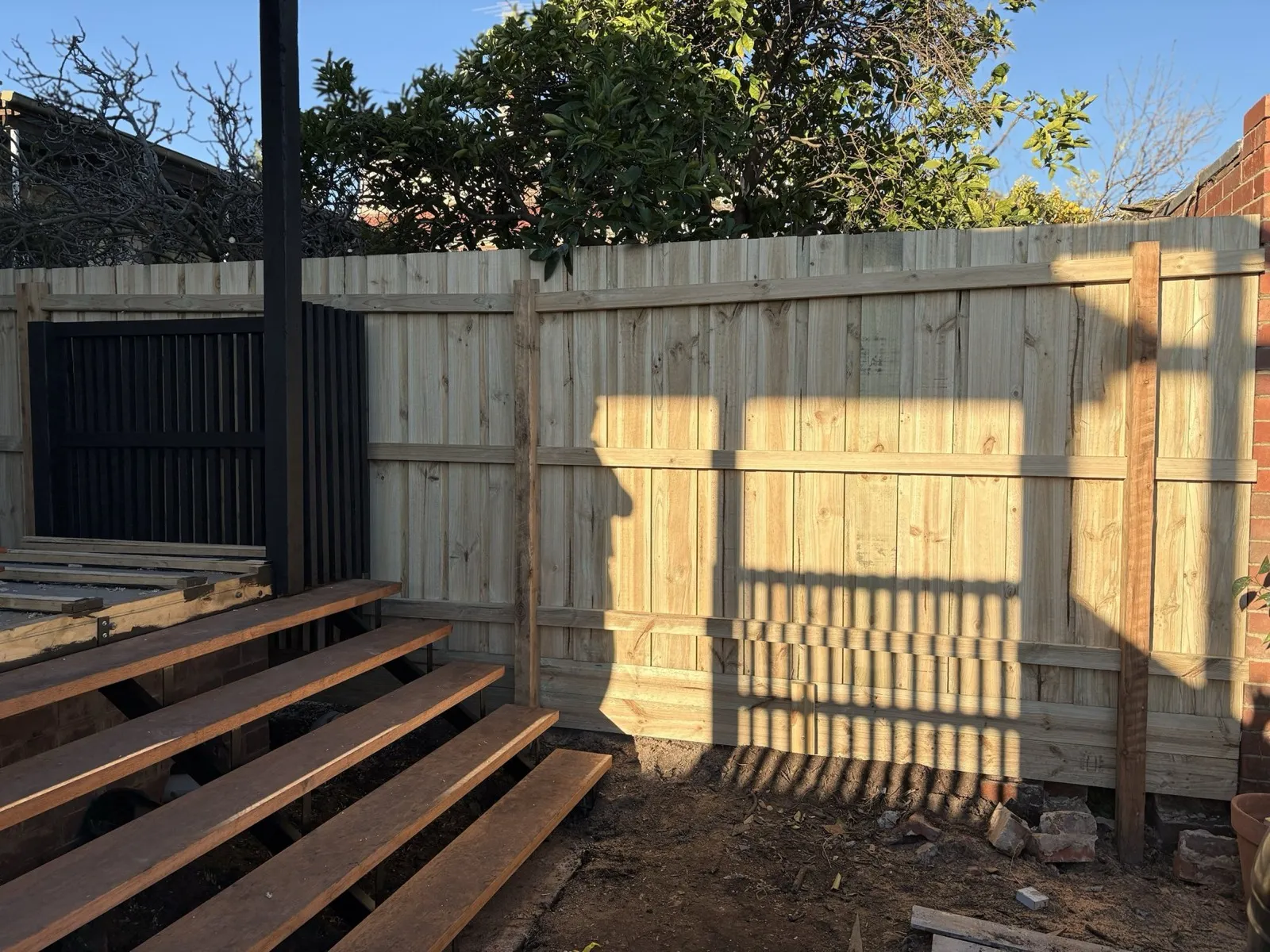
We build timber paling fences using steel or hardwood posts, depending on the job. Posts are set at proper depth in concrete, rails are fixed straight, and palings are installed clean and consistent. It suits boundary fences, replacements and new builds.
We space posts 2.7m apart, on timber or steel. A plinth along the base keeps the palings clear of the soil.
Timber paling suits most boundary fences, from a straight run in a suburban yard to a sloping block.
Every paling fence is treated pine palings on rails, and the post you choose changes how it handles the ground and the wind.
The palings on our paling fences are treated pine, fixed to straight rails with a plinth along the base.
Dense and strong. A strong timber choice for heavy clay and damp ground, and for exposed, windy sites and taller fences.
Steel posts do not rot or attract termites. A good choice where timber posts would rot, and for exposed, windy sites.
Naturally durable and termite resistant. They suit a standard 1.8m fence in a sheltered yard with free-draining ground.
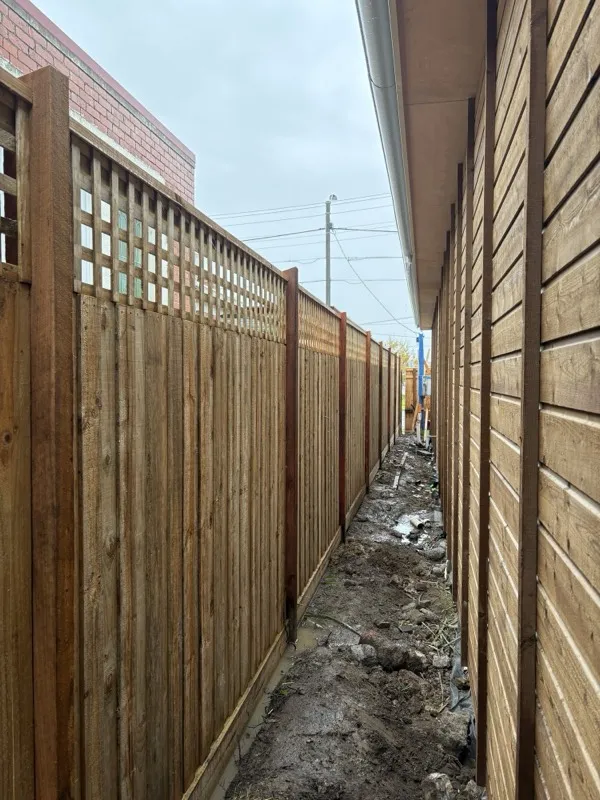
A lattice top over the palings. We have built it on stained hardwood posts.
A timber plinth along the base protects the palings from ground contact.
Four steps, from your first message to a finished fence. See the process in full.
Send photos, measurements or a quick description of what you're after. We can give a rough idea or organise a time to come out.
We come out, take accurate measurements and go through the best options for your property. You receive a clear, itemised quote.
Once approved, we lock in a date and organise materials so everything is ready to go.
We complete the job with a clean, straight finish and leave the site tidy. Final payment is made once the job is done.
We set footings to suit the ground, space posts to our standard and fix everything straight. Here is how.
700mm deep as standard for a 1.8m fence in normal ground. About 300mm deeper and wider in sandy soil. Fill, rock and exposed sites are assessed on site.
Steel or hardwood for paling, and steel where timber would rot. We advise on site.
Posts are spaced 2.7m apart, with rails fixed straight.
Galvanised or stainless fixings, chosen to suit the material.
Your date is locked in and materials are organised before we start.
The site is left tidy. Final payment is made once the job is done.
The price depends on the length, height, style and material, and the ground. Every site is different, so we measure first and send a clear, itemised quote. Quotes are free.
More fence means more posts, footings and materials.
Taller fences need bigger posts and deeper footings.
Timber paling, Colorbond®, steel blade, picket and custom fences each use different materials and labour.
Sand, fill, rock, slope and exposed sites change how we set the footings.
How long a paling fence stands depends mostly on the posts, the soil, drainage and exposure.
H4 treated pine posts are designed for about 15 years in the ground. Hardwood ranges from over 25 years for the most durable species to 5 to 15 years or less for lower grades. Galvanised steel ranges from a few years to about 50, depending mostly on the coating.
Timber rots fastest at ground level where soil stays damp, so we shape the top of the concrete to shed water. Keep soil and mulch from building up at the base. These are typical figures, not guarantees.
These are real jobs we have built. Tap one to see the project page.
We service all of Melbourne, including Toorak, Brighton, Elwood, Malvern and Hawthorn.
We space posts 2.7m apart for timber paling fences, on timber or steel posts. Exposed sites and taller fences usually need closer spacing, which we assess on site.
Both work. Steel does not rot and suits exposed sites. Hardwood is dense and strong and suits heavy clay. We choose with you on site, depending on the ground and the job.
It depends on the posts, the soil, drainage and exposure. H4 treated pine posts are designed for about 15 years in the ground, and the most durable hardwoods can last over 25 years. These are typical figures, not guarantees.
Yes. We have built paling fences that step down to follow the slope, with the plinth tracking the fall of the ground.
It depends on the length, height, style and ground. We measure the site and send a clear, itemised quote. Quotes are free.
Under the Fences Act 1968, neighbours generally share the cost of a dividing fence equally, with exceptions such as one neighbour wanting a more expensive fence or damaging the existing one. Check the Victorian Government fencing page for the current rules.
We usually reply within 3 hours.
Got photos or plans? Text them to 0421 653 583 or email info@svfencing.com.